Category: AI Ethics
-

How AI Makes Real-Time Decisions: Inside High-Speed Intelligent Systems
Real-time AI decision systems are crucial for immediate decision-making, utilizing live data streams to evaluate context and apply predictive models with minimal latency. These systems are essential for applications like fraud prevention and personalized recommendations. They operate autonomously, bridging the gap between intelligence and actionable insights in increasingly automated environments.
-

How AI Finds the Unusual: Anomaly Detection Explained
Anomaly detection is crucial for identifying unusual data points that signify potential risks, such as fraud or system failures. Unlike predictive analytics, it focuses on recognizing deviations from normal behavior. Various AI methods, including supervised and unsupervised techniques, enhance the detection of anomalies, which are essential in maintaining system security…
-

How AI Predicts the Future: Predictive Analytics Explained Simply
Predictive analytics utilizes historical data and machine learning to identify patterns and forecast future outcomes, moving organizations from reactive to proactive approaches. AI enhances the accuracy and scalability of predictions through advanced modeling techniques. This technology is vital for applications like sales forecasting, customer retention, and operational maintenance, ultimately improving…
-

How AI Chatbots Work: From Rule-Based Bots to Large Language Models
AI chatbots have evolved from rigid, rule-based systems to advanced conversational agents through machine learning and natural language processing (NLP). They now understand context, recognize intent, and generate responses more naturally. Despite challenges like bias and data privacy, chatbots serve vital roles in customer support, education, and automation, marking a…
-

How AI Voice Assistants Work: Siri, Alexa, and Google Assistant Explained
Voice assistants like Siri, Alexa, and Google Assistant transform spoken commands into actionable responses using complex AI systems. They incorporate speech recognition, natural language processing, intent recognition, and text-to-speech technologies. Despite their user-friendly interface, they face challenges such as background noise and privacy concerns while continuously improving through user interactions.
-

How AI Sees Images: Inside Image Recognition and Computer Vision
Image recognition AI enables machines to interpret digital images by learning from numerical data through computer vision and deep learning. Utilizing Convolutional Neural Networks, AI identifies and classifies objects in images, powering applications like facial recognition, medical diagnostics, and self-driving cars. However, challenges like bias and privacy must be addressed.
-
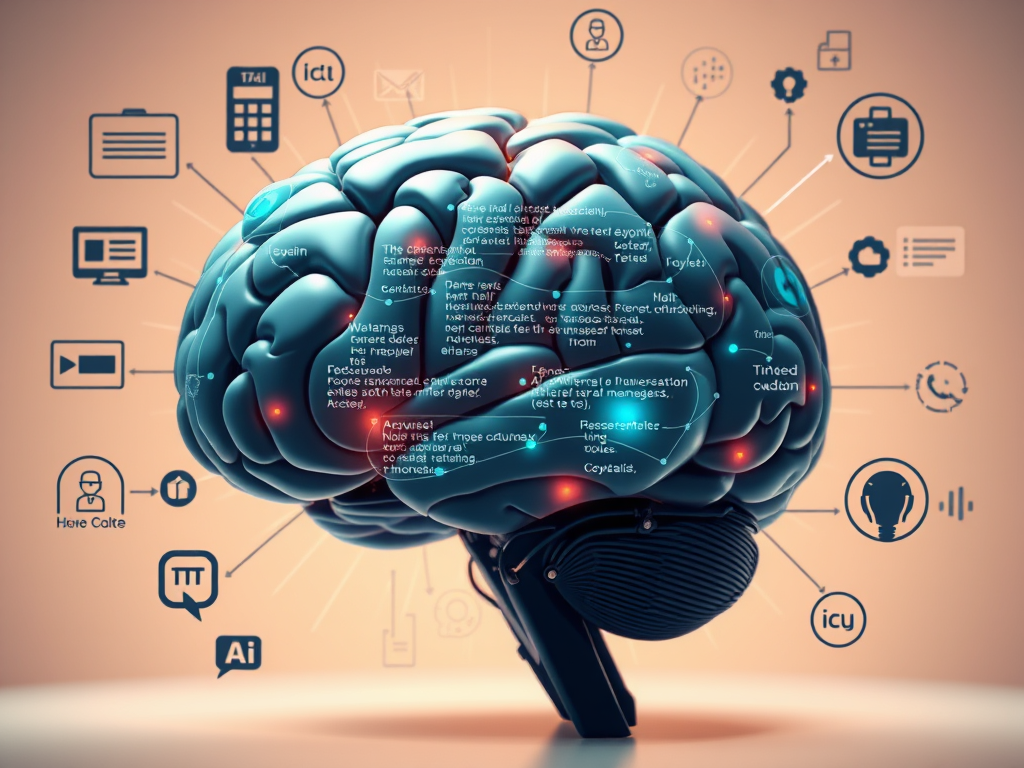
How AI Understands Language: How Natural Language Processing (NLP) Works
Natural Language Processing (NLP) is a critical AI field enabling machines to understand, generate, and interact with human language. It powers search engines, chatbots, and voice assistants through processes like tokenization and context recognition. Despite advancements, challenges like ambiguity and bias remain, highlighting the need for responsible AI practices.
-

The Ethics of AI Automation: What You Should Know ⚖️
AI automation is reshaping our interactions and work environments, offering efficiency and innovation while raising ethical concerns. Key issues include algorithmic bias, accountability, privacy, job impacts, and global inequality. To ensure responsible AI use, businesses must prioritize fairness, transparency, and user inclusivity, fostering trust and positive societal outcomes.