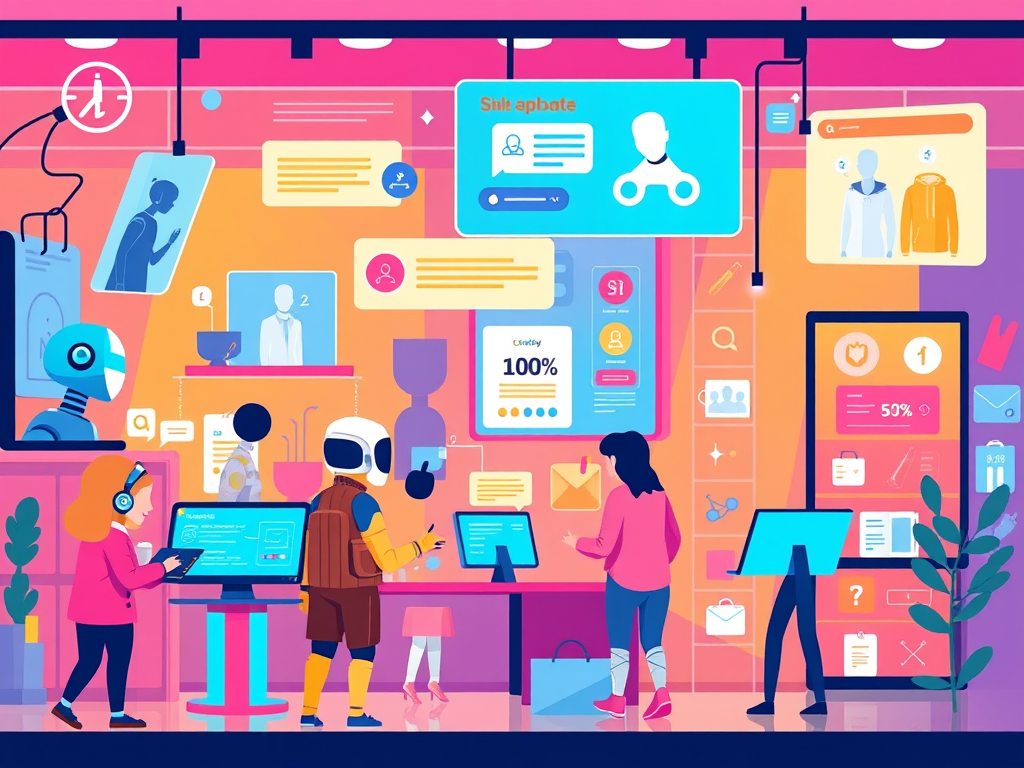
The eCommerce industry is evolving faster than ever. With millions of online stores competing for attention, businesses are turning to Artificial Intelligence (AI) to stand out. One of the most powerful applications of AI in online retail today is AI bots—automated systems that interact with customers, streamline operations, and boost sales.
From chatbots that answer customer queries instantly to recommendation engines that personalize shopping experiences, AI bots in eCommerce are reshaping the way we buy and sell online.
In this article, we’ll explore the different types of AI bots used in eCommerce, their benefits, and how businesses are leveraging them in 2025.
What Are AI Bots in eCommerce?
AI bots are software programs powered by artificial intelligence and natural language processing (NLP). They’re designed to simulate human-like conversations, analyze data, and automate tasks that usually require manual effort.
In eCommerce, AI bots are used for:
- Customer service and live chat.
- Personalized product recommendations.
- Order tracking and updates.
- Marketing automation.
- Fraud detection and payment security.
By working around the clock, bots help eCommerce businesses scale customer support, improve user experience, and increase conversions without hiring large teams.
1. Chatbots for Customer Support 💬
The most common use of AI bots in eCommerce is customer service chatbots. Platforms like Drift, Intercom, and Zendesk AI provide bots that can answer FAQs, guide shoppers, and handle support tickets.
Benefits for online stores:
- 24/7 availability with instant responses.
- Reduced support costs compared to human agents.
- Faster resolution of routine queries like order status or return policies.
👉 Pro tip: The best approach is a hybrid model where bots handle FAQs, and humans step in for complex issues.
2. Personalized Shopping Assistants 🎯
AI shopping bots act as virtual sales assistants, helping customers discover products tailored to their preferences. Amazon’s recommendation engine is a famous example—but now, even small online stores can use similar tools.
How they work:
- Analyze browsing and purchase history.
- Suggest complementary products (“Customers who bought X also liked Y”).
- Deliver personalized discounts or bundles.
Personalized recommendations increase average order value (AOV) and improve customer satisfaction.
3. Order Tracking & Post-Purchase Support 📦
Post-purchase experiences matter just as much as the sale itself. AI bots provide real-time updates on shipping, delivery, and returns.
Examples:
- Automated notifications on WhatsApp, SMS, or email.
- Bots that allow customers to track packages directly in chat.
- Self-service return or exchange requests.
This reduces the burden on customer service teams while keeping customers informed.
4. AI Bots for Marketing & Lead Generation 📢
Beyond customer service, bots also help with marketing automation. AI-powered bots can:
- Collect email addresses and segment leads.
- Run personalized campaigns via chat.
- Offer exclusive discounts to visitors who are about to leave the site.
For eCommerce, these interactions can turn casual visitors into paying customers.
5. Fraud Detection and Security 🔒
AI bots don’t just serve customers—they also protect businesses. With eCommerce fraud on the rise, AI bots are used to monitor transactions and detect suspicious activity.
How AI helps:
- Identifies unusual purchase patterns.
- Flags stolen credit card use.
- Stops account takeovers in real time.
By reducing fraud, bots save businesses money and protect customer trust.
6. Voice Bots and Conversational Commerce 🎙️
Voice assistants like Alexa, Google Assistant, and Siri have entered the shopping space. Many eCommerce businesses now build voice-enabled bots to allow customers to:
- Add products to their cart using voice commands.
- Reorder frequently purchased items.
- Get personalized shopping suggestions through voice.
This trend—known as conversational commerce—is expected to grow rapidly in the coming years.
7. Inventory and Back-End Automation ⚡
Not all bots are customer-facing. Many work behind the scenes to streamline operations:
- Automating inventory updates.
- Reordering stock when levels are low.
- Analyzing sales trends to forecast demand.
This ensures smoother operations and fewer out-of-stock frustrations for customers.
Benefits of AI Bots in eCommerce 🚀
The rise of AI bots is transforming online retail with clear advantages:
- Faster customer service: Immediate responses build trust.
- Higher conversions: Personalized recommendations drive sales.
- Lower costs: Automation reduces the need for large support teams.
- Data insights: Bots collect valuable data on customer behavior.
- Scalability: Handle thousands of customer interactions simultaneously.
Challenges of Using AI Bots ⚠️
While powerful, AI bots in eCommerce come with challenges:
- Over-automation: Customers may feel frustrated if they can’t reach a human.
- Data privacy concerns: Handling personal data responsibly is critical.
- Implementation costs: High-quality AI bots may require upfront investment.
The solution? Balance automation with human support, strong data policies, and transparent communication.
Future of AI Bots in eCommerce 🌐
Looking ahead, AI bots will become even more advanced:
- Hyper-personalized shopping experiences.
- Bots that predict customer needs before they shop.
- Seamless integration with AR/VR shopping platforms.
- End-to-end AI-driven customer journeys.
By 2030, AI bots may act like personal digital shopping concierges—handling everything from product discovery to checkout.
Final Thoughts
AI bots are no longer optional in eCommerce—they’re essential. From chatbots that provide instant support to bots that recommend products, prevent fraud, and manage inventory, these tools are reshaping the online shopping experience.
For businesses, the key is finding the right balance: let bots handle repetitive tasks while keeping humans available for empathy-driven conversations.
In 2025 and beyond, the eCommerce brands that embrace AI bots will not only improve efficiency but also deliver the kind of seamless, personalized shopping experiences customers expect.
Leave a Reply